




In the mid-1960s, Fiat began to implement a project that was as ambitious as it was successful: the creation of a family of cars built around the modern, material 124 saloon, a project that crossed national borders and became a worldwide success.
The design of the new Fiat three-volume saloon car began under the technical guidance of Dante Giacosa. From the architectural possibilities on offer, he selected the more traditional option, leaving mainly to design the task of remaining in step with the times. He would also add several less obvious innovations that proved to be a success.
At the Geneva Motor Show in March 1966, the Turin-based manufacturer presented the new Fiat 124 as part of the segment that was broadly populating the European market: medium-sized cars. Within the range, it was placed between the latest Fiat 1100 R and the American-style 1300 – 1500 pairing. The 1100 R, which would remain on sale until 1969, had its power reduced to distance it from the new 124, which replaced the 1300 that later went out of production. One year later in 1967, the Fiat 125 arrived, to take the place of the 1500.
The angular forms were very modern for the time: the new Fiat 124 was a four-door saloon car with three well-defined volumes. However, it had a slightly sportier appearance than the 1100 R and 1300, conferred by its greater width combined with its lower height, whereas it was positioned between the two in terms of length, coming in at slightly over four metres.
The large and bright passenger compartment accommodated up to five passengers. The driving position was comfortable, from which all the controls could be easily reached, with excellent visibility from the large windows. The layout of the boot was also rational: the petrol tank was on the right side, whereas the spare wheel was on the left in a vertical position, much appreciated for how easy it was to reach even when the boot was full.

Although the layout was traditional, with a longitudinal front engine and rear-wheel drive, the mechanics and chassis were more refined than they had previously been. Under the bonnet, the 1,197-cc four-cylinder engine – with a single side camshaft and overhead valves controlled by pushrods and rocker arms – delivered 60 hp. The design, by the engineer Aurelio Lampredi, involved the use of five main bearings on which the crankshaft rotated: this would become one of the strengths for the robustness and longevity of the car.
The chassis also presented technical evolutions, especially in the rigid rear axle, suspended on coil springs with telescopic shock absorbers inside, as a more modern solution than traditional leaf springs. An effective Panhard crossbar significantly improved stability, with anti-roll bars on the front and rear axles completing the suspension. The braking system consisted of four disc brakes, initially without a brake booster but with a regulator on the rear axle. The performance was remarkable for the time, facilitated by the careful use of materials, with the scales for its dry weight coming to a halt at only 855 kg.
At the Turin Motor Show in November 1966, the station wagon version known as “Familiare” made its debut, equipped with a tailgate to access the larger load compartment, a third side window, a larger fuel tank, tyres and rear axle ratio suitable for the greater load. But there was more to come too: the “124” project also included two sports versions, hence the Fiat 124 Sport Spider designed by Pininfarina. It made its debut in 1966 and would then evolve into the winning Fiat 124 Abarth Rally and 124 Sport Coupé from the hands of the Fiat Centro Stile, both presented to the public in Geneva in 1967. Both latter models were fitted with the glorious “Lampredi twin-cam”, initially a 1.4-litre delivering 90 hp in the spider, rising to 1.6 and 110 hp in the coupé but destined to increase further.
The overall quality, especially in relation to the price, was immediately appreciated by both the public and by insiders, who named it Car of the Year 1967, the fourth time the authoritative award was given. The long series began with the 124, which continued Fiat’s position atop the standings with nine cars in first place.

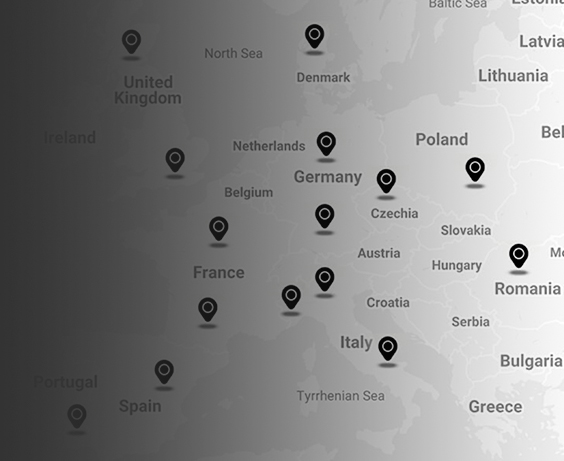
In addition to creating different bodies – from saloon car and station wagon to coupé and spider – the complex “124” project crossed national borders with large-scale production also taking place abroad, mainly in the Soviet Union and Spain, but also elsewhere.
The Fiat 124 was destined for more than one cross-border outlet, so much so that it became a true “global car”. Indeed, on 4 May 1966, in the central hall of the Centro Storico Fiat (Fiat Historical Centre), Fiat CEO Vittorio Valletta and the Soviet Minister for the Automotive Industry Alexandr Mikhailovich Tarasov signed an initial agreement, followed on 15 August in Moscow by the definitive protocol.
The contract between Fiat and the Soviet government stipulated that the Turin-based company would provide a comprehensive plan for the plant, leaving to the Russians the designs and industrial property rights of two car models based on the Fiat 124, modified to adapt to the particular climactic and road conditions of the USSR. The large AvtoVAZ plant was therefore founded near the city of Tolyatti in Samara Oblast, becoming fully operational in 1970. The Lada-VAZ 2101, better known as the Žiguli, rolled off the expansive assembly lines, as a version of the 124 sedan and station wagon but with a reinforced rear axle.
The impact on Soviet production was impressive, rising from 200,000 units in 1965 to 1.2 million in 1972. In addition to supplying many components to the subsequent 4x4 Lada Niva (the VAZ 2121, 1977), the Žiguli – with certain evolutions but substantially remaining faithful to the initial version – continued into the new millennium, remaining in production until 2012.
However, cross-border production was not limited to the Soviet Union. From the 1950s, partly based on joint shareholdings, Fiat provided know-how to Spain's SEAT. After the domestic boom of the Spanish version of the Fiat 600, the SEAT 124 arrived in 1968. For a short period, it was also marketed in Italy as the SEAT 124D Pamplona, to be replaced in 1974 by the Fiat 131. As well as in Spain, it was also built in many other nations, with significant production in Turkey, India and South Korea.


