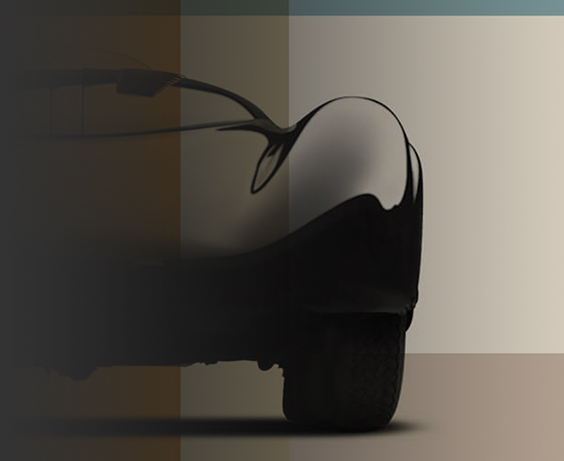
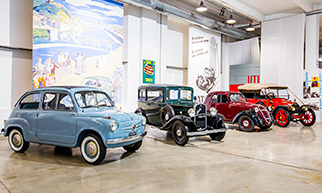









In the 1970s, an agency of the United States Department of Transportation decided to act on the issue of car safety by announcing a competition, initially aimed at American industry, for cars that could ensure the occupants would have the greatest chance of surviving an accident. The idea crossed the oceans, with the involvement of European and Japanese manufacturers.
The genesis of experimental safety vehicles, known by the acronym ESV, began in the early 1970s, when the United States National Highway Safety Bureau, later the National Highway Traffic Safety Administration (NHTSA), decided to take radical action on the issue of automotive safety.
In 1971, the agency launched a competition for American industry to design all-new cars that could ensure the occupants would have the greatest chance of surviving an accident. The objective was two-fold: on the one hand, to demonstrate, based on thorough and standardised crash tests, the need to build more robust cars that could better absorb impact energy; on the other, to stimulate governments to set specific and updated safety regulations.
The first prototypes were made by two aeronautical companies, American Machine & Foundry and Fairchild Hiller, both free from image and marketing constraints. The first ESVs were presented back in December 1971, with the inclusion of daring solutions that were far and away from the cars of the time.
As the project progressed, the major manufacturers also entered the field: towards the end of 1972 Ford and General Motors presented their proposals, derived from production models but radically modified according to the new technical specifications. In a short time, numerous European and Japanese companies also joined, including Fiat, Mercedes, Volkswagen, Datsun (now Nissan) and Honda.
Unlike the American prototypes, however, none of these companies developed all-new cars: all the European and Japanese ESVs were based on production cars, suitably reinforced and adapted to the rigorous requirements of the international conferences in Paris, Sindelfingen, Washington and Kyoto, which updated the specifications and requirements several times between 1971 and 1973.

Fiat joined in with the trend by creating three different cars belonging to three weight and size ranges. Their technical structure differed: engine and rear-wheel drive, “all-forward” or front engine and rear-wheel drive. These cars did not enter production but acted as concrete starting points for the improvement of car safety in the following years.
In the context of such a major international trend, Fiat developed its own family of prototypes divided into three categories, corresponding to three benchmark weights according to the NHTSA classification: ESV 1500, ESV 2000 and ESV 2500.
The three models, although derived from production cars, were completely reinterpreted to improve structural safety. They shared a fundamental characteristic: a triple reinforced protective structure in the floor, along the entire beltline and on the roof, to create an extremely robust survival cell. They also covered three different mechanical solutions, to offer a comprehensive range of configurations for the study of behaviour in the event of an impact.
The first model, the Fiat ESV 1500, weighing approximately 680 kg, or 1500 lb – hence the name – used the mechanics of the small 500 that was evolving into the Fiat 126: the Lingotto hatchback with rear-wheel drive engine and traction, a traditional scheme for the time.
Presented at the 1972 Washington conference, 13 units were built and served as the most radical workshop for the Turin manufacturer's ESV family. Although based on a compact car, it incorporated highly advanced shock absorption structures, large bumpers, programmed deformation zones and multiple chassis reinforcements, contributing significantly to the definition of the solutions later discussed at the 1973 Kyoto conference.
The second prototype, the Fiat ESV 2000, belonged to the intermediate weight class at approximately 907 kg; it was based on the Fiat 128 with front engine and front-wheel drive. A five-door car designed specifically to analyse the relationship between style and safety, it demonstrated how the adoption of reinforced structures could revolutionize the design of a production car. It had a curved windscreen, necessary to keep the A-pillars in the same position as the original car despite the strengthening of the body, combined with a characteristic bulge in the roof at the B-pillars, designed to house a transverse rib that connected the A-pillars to each other as a roll bar.


